




How to Choose the Right Suit for Your Body Type | Enhance Proportions & Minimize Flaws
A beautiful suit is not defined only by its fabric or construction, but by how harmoniously it complements the wearer’s physique. Every body has its strengths and imperfections, and the right suit can subtly highlight the good while gently minimizing areas you feel less confident about.
If this is your first time exploring how to choose a suit according to body type, this guide will give you a clear, practical foundation before stepping into the bespoke tailoring process.
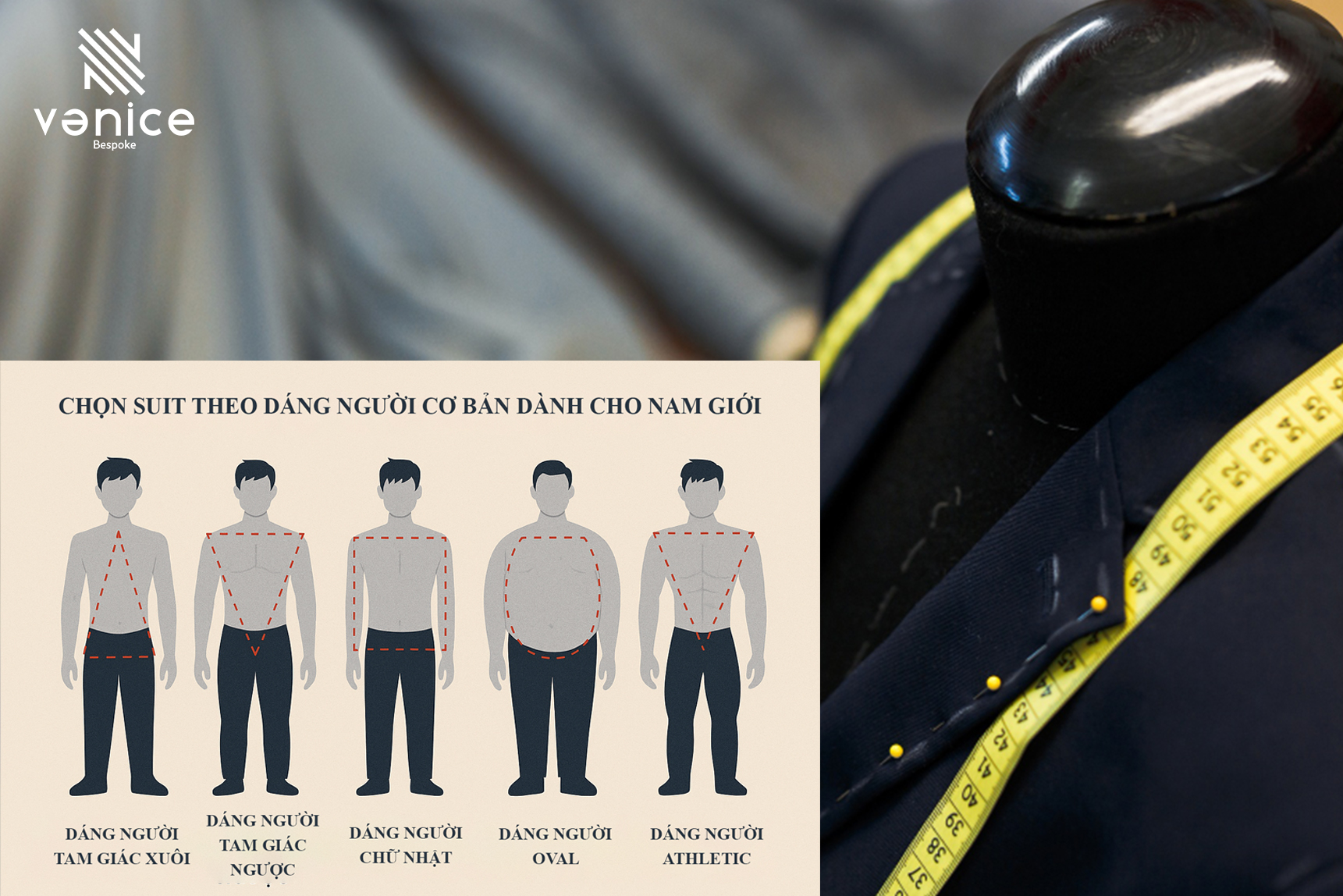
Understanding the Five Basic Male Body Types
In tailoring, men’s body shapes are commonly categorized into five main groups:
1. The Triangle Body Type (narrow shoulders – wider hips)
Sloping or narrow shoulders, fuller waist and hips.
2. The Inverted Triangle Body Type (broad shoulders – small waist/hips)
Wide shoulders, developed chest, narrow waist.
3. The Rectangle Body Type (balanced proportions, minimal definition)
Shoulders, waist, and hips have similar widths.
4. The Oval Body Type (round midsection)
Prominent belly, fewer straight lines, softer overall frame.
5. The Athletic Body Type (broad shoulders – narrow waist)
Muscular shoulders, defined torso, small waist.
Identifying your body type helps determine the right shoulder structure, lapel width, jacket length, and trouser fit that will create the most flattering silhouette.
Choosing the Right Suit for Each Body Type
1. Triangle Body Type – Narrow Shoulders, Wide Hips
Goal: Broaden the shoulders to balance the upper half.
Recommended suit details:
-
Light shoulder padding for a more proportionate frame.
-
Medium to wide lapels to create fuller chest lines.
-
One- or two-button jackets with slightly higher button stance.
-
Straight-cut trousers to avoid emphasizing the hips.
-
Dark colors to create a leaner look.
Avoid: Soft shoulders, skinny trousers, horizontal patterns.
2. Inverted Triangle Body Type – Broad Shoulders, Narrow Hips
Goal: Soften the upper body and create visual balance.
Recommended suit details:
-
Natural or soft shoulders to reduce visual bulk.
-
Small to medium lapel width (avoid anything too wide).
-
Two-button jacket with lower button stance for a softer V-line.
-
Straight or slightly wider trousers to balance the lower half.
Avoid: Overly tight chest area, overly wide lapels.
3. Rectangle Body Type – Straight Frame, Minimal Definition
Goal: Create subtle curves and stronger structure in the shoulders and waist.
Recommended suit details:
-
Slightly structured shoulders for a stronger masculine outline.
-
Light waist suppression (darting) to shape a V-silhouette.
-
Two-button jacket with moderately low button stance.
-
Vertical stripes to elongate the body.
Avoid: Boxy fits or overly loose silhouettes.
4. Oval Body Type – Prominent Midsection
Goal: Streamline the waist area and elongate the overall proportion.
Recommended suit details:
-
Medium to wide lapels to draw attention upward.
-
Two- or three-button jackets depending on height.
-
Regular-fit jackets that skim the body without clinging.
-
Higher-rise trousers to create a cleaner line.
-
Dark fabrics and minimal patterns.
Avoid: Tight jackets, low-rise trousers, glossy materials.
5. Athletic Body Type – Broad Shoulders, Narrow Waist
Goal: Maintain natural balance without making the body appear overly “tight” or rigid.
Recommended suit details:
-
Natural shoulders; heavy padding is unnecessary.
-
Two-button slim-fit jackets with comfortable movement.
-
Slim or straight-slim trousers for a streamlined look.
-
Solid fabrics or subtle patterns to highlight physique.
Avoid: Overly tight fits that exaggerate muscle tension.
Essential Suit-Fit Principles Every Man Should Know
Even without deep tailoring experience, keeping these guidelines in mind will help you choose a suit that fits well:
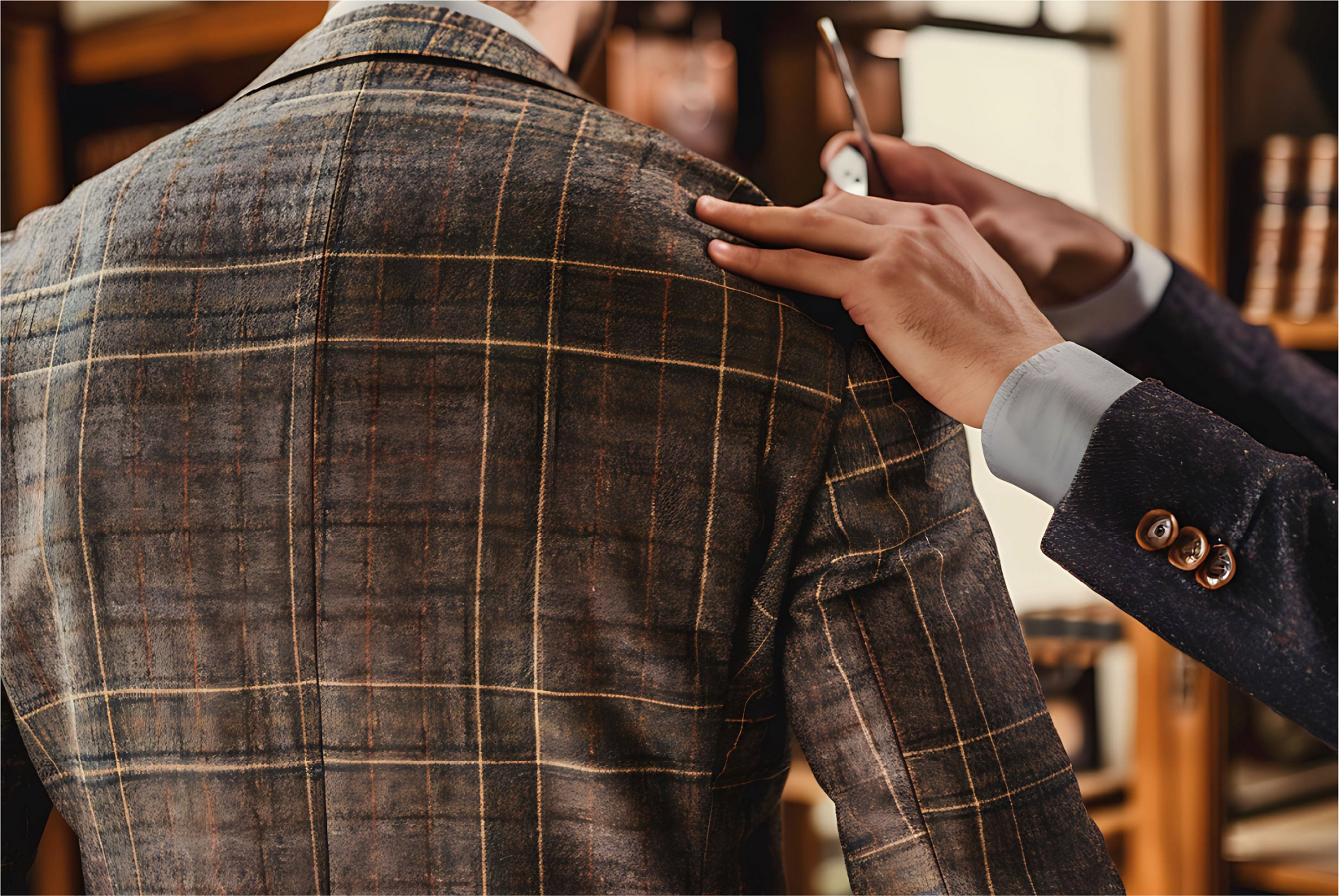
1. Shoulders Must Fit Perfectly
The shoulder line is the “backbone” of a suit. If it doesn’t fit, the entire jacket loses structure.
2. Correct Sleeve Length
Sleeves should end at the wrist bone, revealing 0.5–1.5 cm of shirt cuff.
3. Jacket Length
The ideal jacket should reach mid-seat, ensuring visual balance.
4. Trouser Fit
Trousers should fall straight from the hips with lightly tapered thighs.
5. Choosing the Right Fabric
-
Taller men: lightweight wool.
-
Fuller figures: matte, non-reflective fabrics.
-
Slim men: textured or subtly patterned fabrics for added depth.
Common Suit-Fitting Mistakes to Avoid
-
Choosing suits based solely on trends instead of body shape.
-
Wearing overly tight slim-fit silhouettes.
-
Selecting lapel widths that don’t match shoulder proportions.
-
Ignoring jacket length, leading to imbalanced proportions.
-
Not communicating enough with your tailor to optimize your fit.
Conclusion
A well-fitting suit begins with understanding your body shape. Once you identify your proportions and seek guidance from an experienced tailor, choosing the right shoulders, lapels, structure, and silhouette becomes much easier. The right suit doesn’t just enhance appearance—it elevates presence, confidence, and personal style.
Vanice Bespoke – Made-to-Measure Excellence
Hotline: 1900 633 429
Email: info@vanice.vn
Website: www.vanice.vn
Fanpage: Vanice Bespoke – Premium Tailoring
 Other news